
Cape May County Property Records
Cape May County property records are maintained by the County Clerk in Cape May Court House. This county has one of the most remarkable archives in New Jersey, with deed records dating back to 1692. The clerk's office provides an online land records portal where you can search over 330 years of property transactions. Cape May County also operates a satellite office in Rio Grande. Residents, title professionals, and researchers can access these public records online or in person.
Cape May County Quick Facts
Cape May County Clerk Office for Property Records
Rita Marie Fulginiti serves as the Cape May County Clerk. The main office is at 7 North Main Street in Cape May Court House. A satellite office operates at 1100 Route 47 South in Rio Grande. Both locations accept documents for recording and can help with record searches. The main office holds the complete archive of Cape May County property records.
Visit the Cape May County Clerk's website for hours, fees, and filing details. You can call (609) 465-1010 with questions about recording or searching property records in Cape May County.
| Main Office |
Cape May County Clerk 7 North Main Street Cape May Court House, NJ 08210 Phone: (609) 465-1010 |
|---|---|
| Satellite Office |
1100 Route 47 South Rio Grande, NJ 08242 |
| Hours | Monday through Friday, 8:00 AM to 4:00 PM |
| Website | capemaycountynj.gov/departments/county-clerk |
The clerk's office handles all deed recordings, mortgage filings, and certified copy requests for Cape May County. Staff can also help you search the older record books in person.
How to Search Cape May County Property Records Online
Cape May County provides a free online land records portal. This system contains deed records going back to 1692, making it one of the most complete digital archives in New Jersey. You can search by name, document type, recording date, or book and page number. The portal is available around the clock from any computer.
The Cape May County Land Records Portal lets you search and view document index data for free. You can look up grantors, grantees, and specific document types across more than three centuries of Cape May County property records.
The Cape May County land records search portal gives public access to one of New Jersey's oldest property record collections.
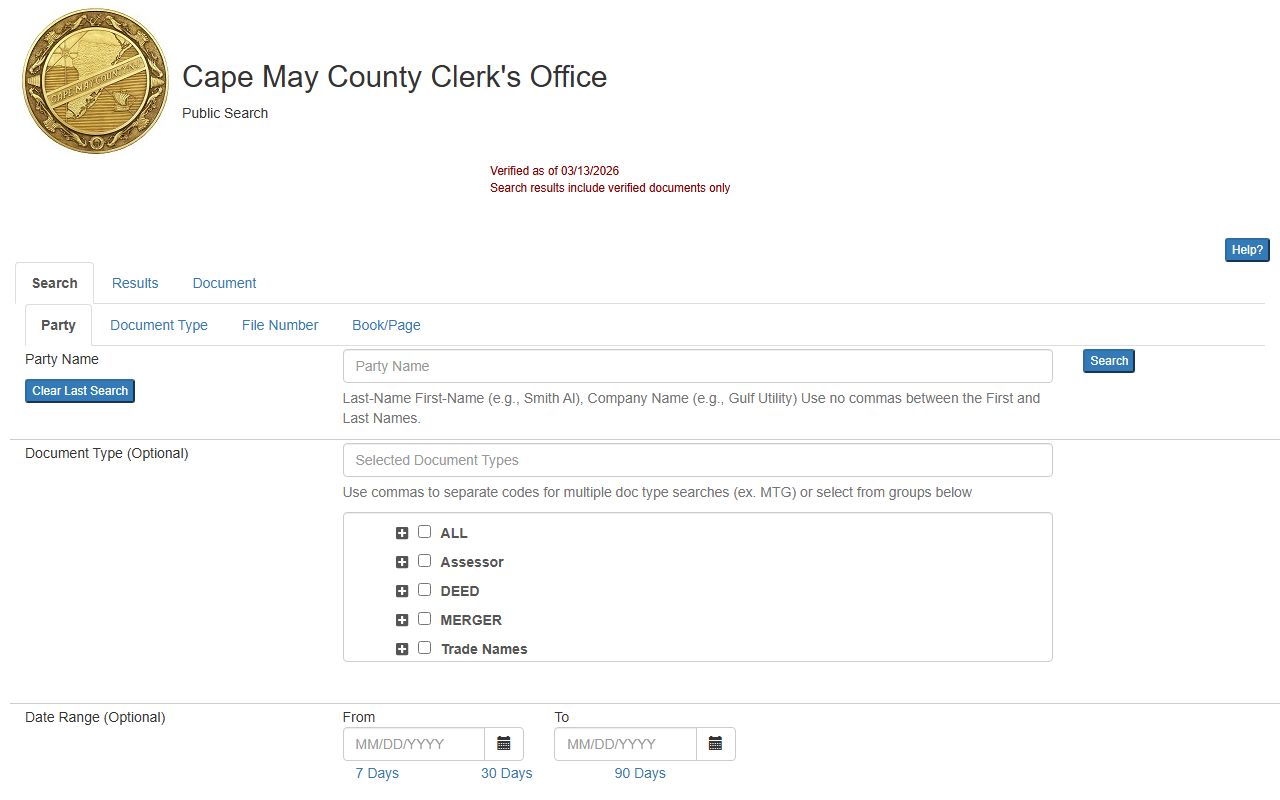
Search results display the recording details, parties involved, and document references for Cape May County records. You can view images of many documents directly through the portal.
For in-person searches, visit the main office in Cape May Court House. Staff can help you navigate the older record books that may not be fully indexed online. Under N.J.S.A. 47:1A-1, the Open Public Records Act guarantees your right to access these Cape May County documents.
The New Jersey Division of Taxation also maintains property data that can supplement your Cape May County search. The Property Tax Transparency portal has assessment and tax rate information for every municipality.
Cape May County Property Recording Fees
Recording fees in Cape May County follow the standard New Jersey schedule. The first page of a deed costs $40 to record. Each added page is $10. Mortgages use the same rate structure. A certified copy of any recorded document costs $10 in Cape May County.
Self-service copies at the clerk's office cost $0.05 per page. This option works well if you just need plain copies for your own files. Certified copies carry the clerk's official seal and are required for most legal transactions. All documents must meet format standards under N.J.S.A. 46:26A-1 before the Cape May County Clerk will accept them for recording.
Note: Always confirm current fees with the Cape May County Clerk at (609) 465-1010 before submitting documents for recording.
Historical Property Records in Cape May County
Cape May County holds some of the oldest property records in all of New Jersey. Deeds in the county's archive date back to 1692. That is more than 330 years of recorded land transactions. These early records include colonial proprietary deeds from the West Jersey era. They document some of the first land transfers between European settlers and original proprietors.
The historical depth of Cape May County property records makes this archive valuable for genealogists, historians, and legal researchers. Early deed books reveal property boundaries, family connections, and land use patterns from colonial New Jersey. Some of these records predate the formation of the United States by nearly a century.
The oldest records are available through the online land records portal. Cape May County has done extensive work to digitize and index these historical documents. For records not yet online, visit the clerk's office in Cape May Court House. The OPRA portal can also help you request specific historical documents from state-level archives that may relate to early Cape May County property transactions.
Researchers should also check the state's collection of early colonial records at the New Jersey Division of Archives and Records Management. The NJ Tax Records website provides additional property data that can supplement historical research in Cape May County.
Types of Property Documents in Cape May County
The Cape May County Clerk records all standard real estate documents. Deeds transfer ownership. Mortgages create liens. Discharges release those liens. Lis pendens notices flag pending lawsuits that affect property. Judgment liens and tax liens also appear in the records.
- Deeds (warranty, quit-claim, bargain and sale)
- Mortgages and discharges
- Lis pendens notices
- Federal and state tax liens
- Easements and restrictions
- Construction lien claims
- Colonial proprietary deeds
Cape May County has a unique collection of colonial-era documents not found in most other New Jersey counties. These proprietary deeds record the earliest private land ownership in the region. They are part of the public record and can be searched through the clerk's online portal or in person.
Property tax assessments in Cape May County are handled at the municipal level under N.J.S.A. 54:4-1. Each town's tax assessor determines property values. The New Jersey Division of Taxation provides statewide guidance on assessment practices.
Searching Cape May County Records Through State Resources
In addition to the county clerk's portal, several state-level resources can help you find Cape May County property records. The New Jersey Division of Taxation maintains property assessment data for every municipality. This data complements the deed and mortgage records held by the Cape May County Clerk.
The state's property tax transparency portal provides tax rate comparisons for Cape May County's 16 municipalities, as shown on the New Jersey state resources page.
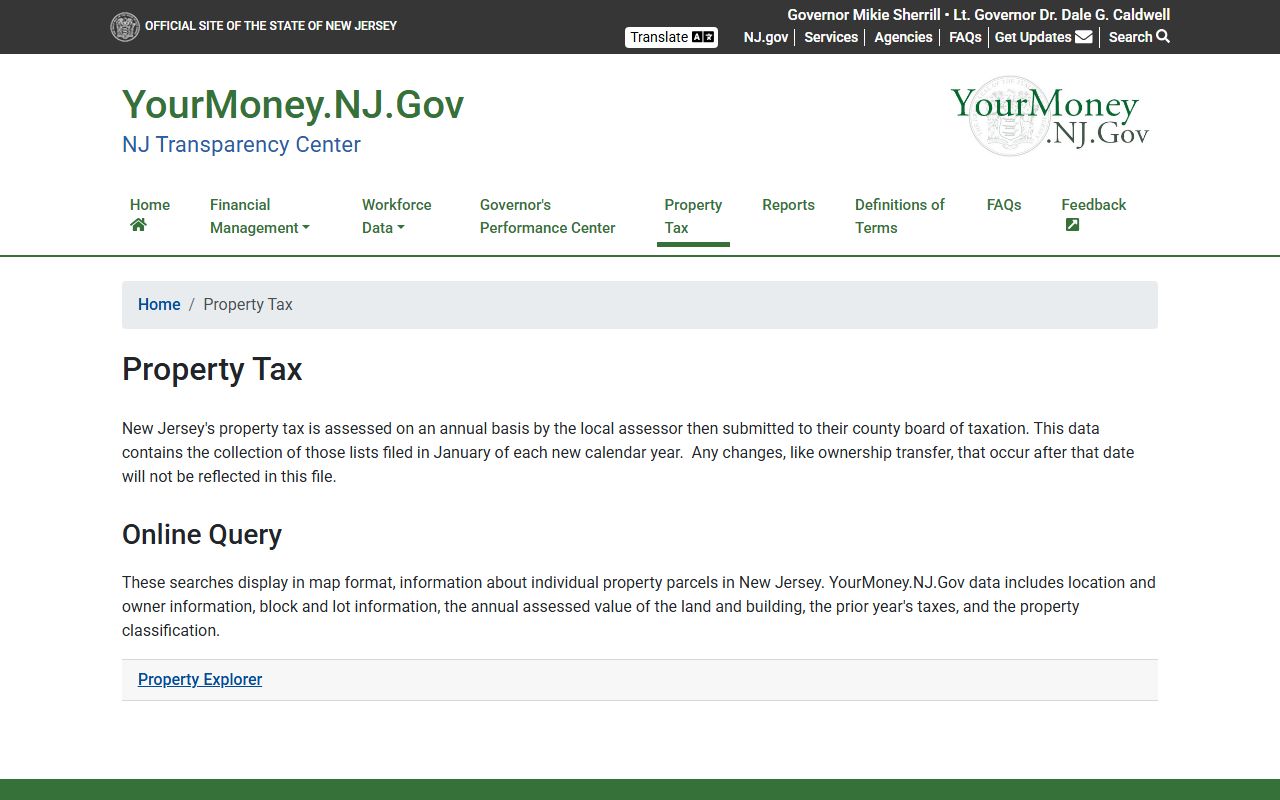
You can use this tool to compare tax rates, average assessments, and total levy amounts across Cape May County towns like Cape May City, Wildwood, Ocean City, and Avalon.
Cities and Towns in Cape May County
Cape May County includes 16 municipalities. Well-known places include Cape May City, Wildwood, Ocean City, Avalon, Stone Harbor, Sea Isle City, and Upper Township. All property records for these places are filed at the Cape May County Clerk's office. Each municipality handles its own property tax assessment, while deeds and mortgages are county-level records.
Cape May County is a popular shore destination. Many properties are vacation homes or seasonal rentals. This creates a high volume of real estate transactions each year. The clerk's office processes deed transfers, mortgage recordings, and lien filings for all of these transactions in Cape May County.
Nearby Counties
Cape May County is at the southern tip of New Jersey. Only two counties share a border with it. If you need property records from a neighboring area, contact the correct county clerk.