
Search New Jersey Property Records
New Jersey property records are kept at the county level across all 21 counties in the state. Each county clerk or register of deeds holds land records such as deeds, mortgages, liens, and tax data for each town in that county. You can search these New Jersey property records online, by mail, or in person at local offices. This site helps you find the right tools and links to look up property records in New Jersey, whether you need a deed copy, a tax assessment, or a full title search.
New Jersey Property Records Quick Facts
Where to Find New Jersey Property Records
Property records in New Jersey are stored at the county level. Each of the 21 counties has a clerk or register of deeds who records and keeps all land documents. These offices hold deeds, mortgages, liens, and other papers that show who owns a piece of land. When you buy or sell a home, the deed is filed with the county. That record stays on file for good. You can get a copy at any time from the clerk who holds it.
Some counties use a County Clerk for land records. Others have a Register of Deeds and Mortgages. Essex and Hudson counties each have a Register of Deeds instead of a County Clerk for property filings. The job is the same in both setups. The office records new documents, keeps old ones safe, and gives the public a way to search New Jersey property records. Under the Open Public Records Act (OPRA), codified at N.J.S.A. 47:1A-1 et seq., you have the right to view these records. Agencies must respond to requests within seven business days. No one needs to show a reason for wanting to see property records in New Jersey.
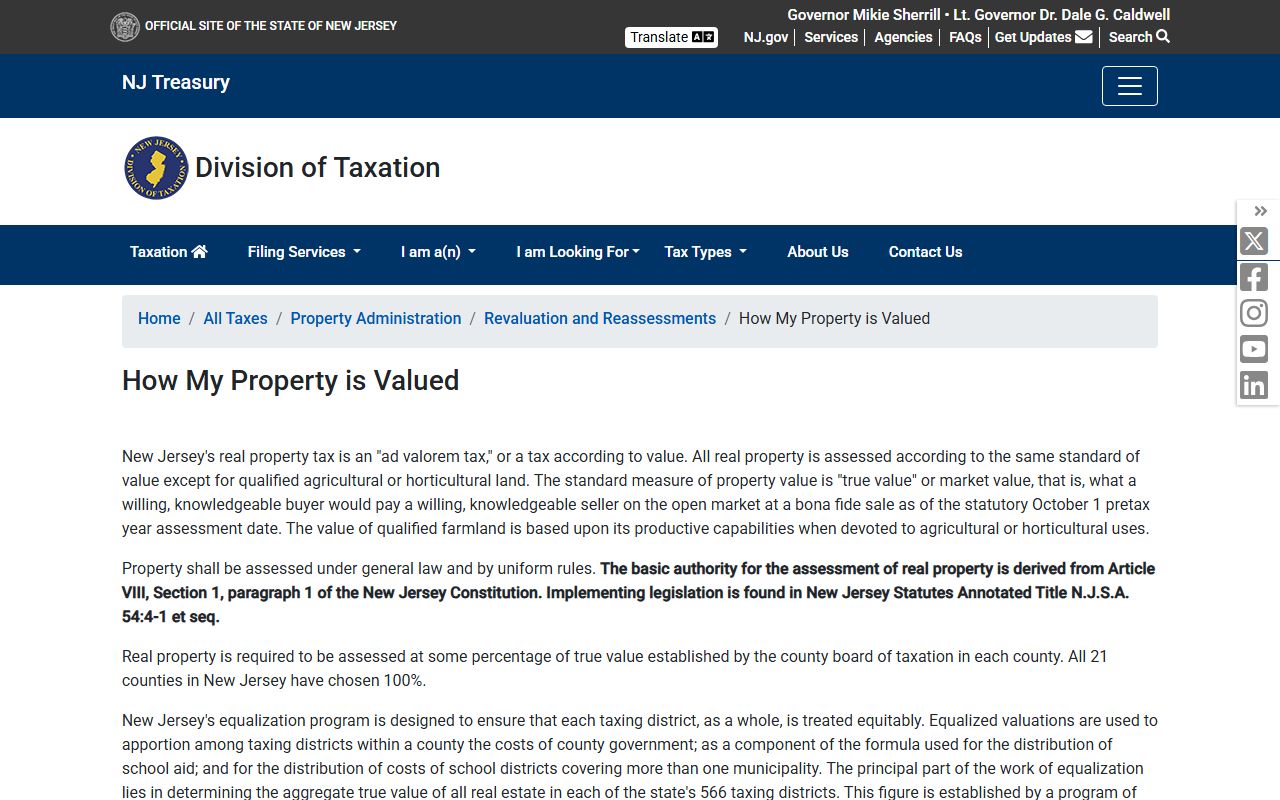
The NJ Division of Taxation also plays a role. It sets rules for how all real property gets assessed. New Jersey uses an "ad valorem" tax, which means based on value. All 21 counties assess property at 100% of true value. The basic law for this comes from Article VIII of the New Jersey Constitution and N.J.S.A. 54:4-1 et seq. County tax boards in each county make sure these rules are followed for New Jersey property records.
Note: County offices handle the day-to-day recording of deeds and mortgages, while the state sets the rules all counties must follow for New Jersey property records.
How to Search Property Records in New Jersey
Most counties in New Jersey now let you search property records online. Each county runs its own search system. Some use the PRESS platform, which stands for Public Records Electronic Search System. Others use third-party tools like US Land Records or New Vision Systems. The best place to start is the website for the county where the property sits. From there you can look up deeds, mortgages, and other land documents tied to that address or owner name.
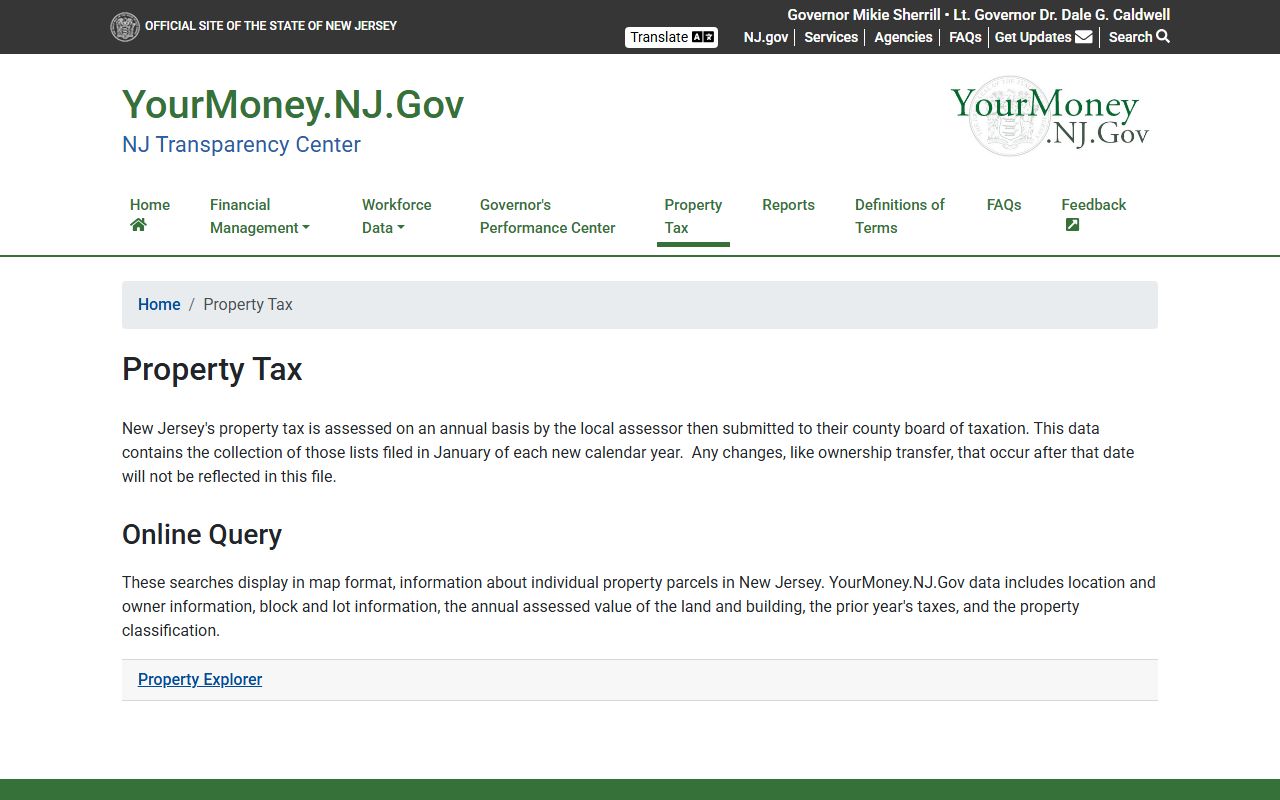
The NJ Property Tax Transparency Portal is a good statewide tool. It shows property data in a map format. You can search by address, block and lot, or owner name. The tool pulls data from all 21 counties and 566 towns. It shows the assessed value, prior year taxes, land and building values, and the property class. This is a fast way to get basic facts about any parcel in New Jersey without going to the county office.
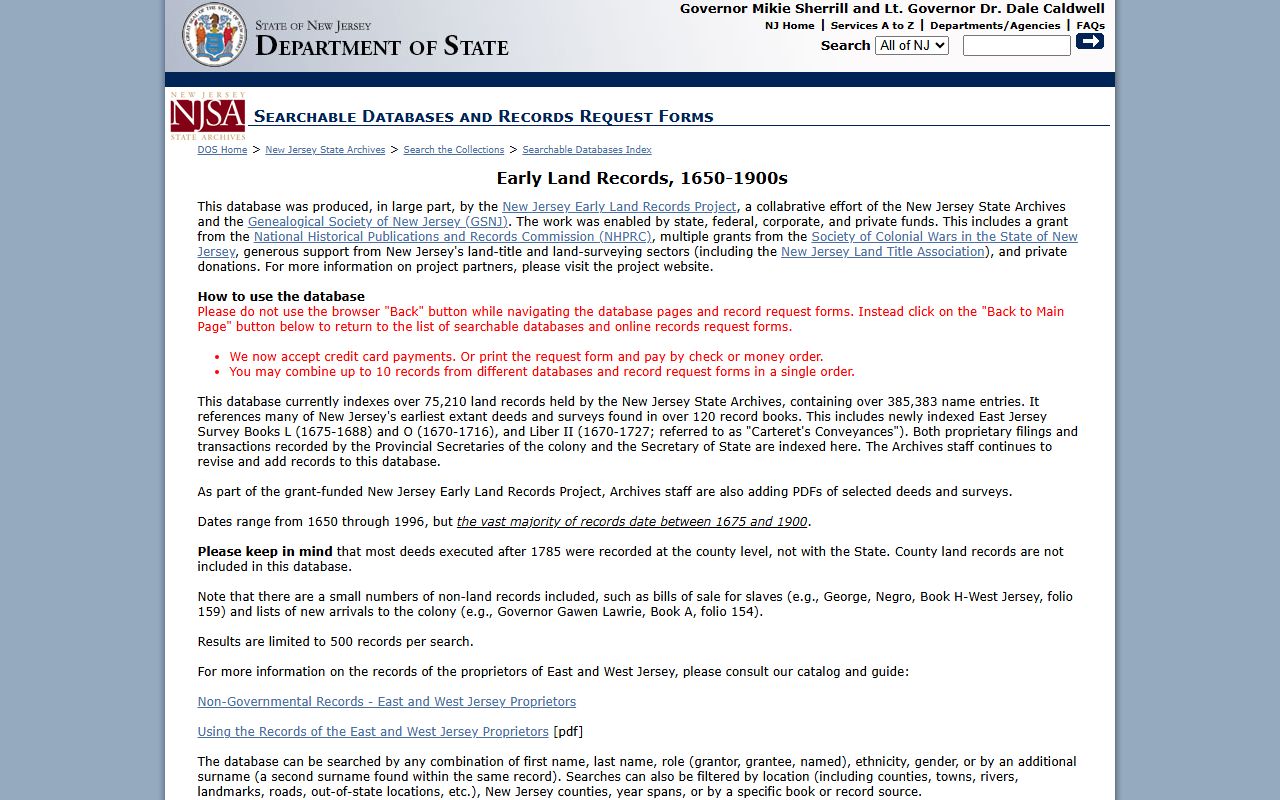
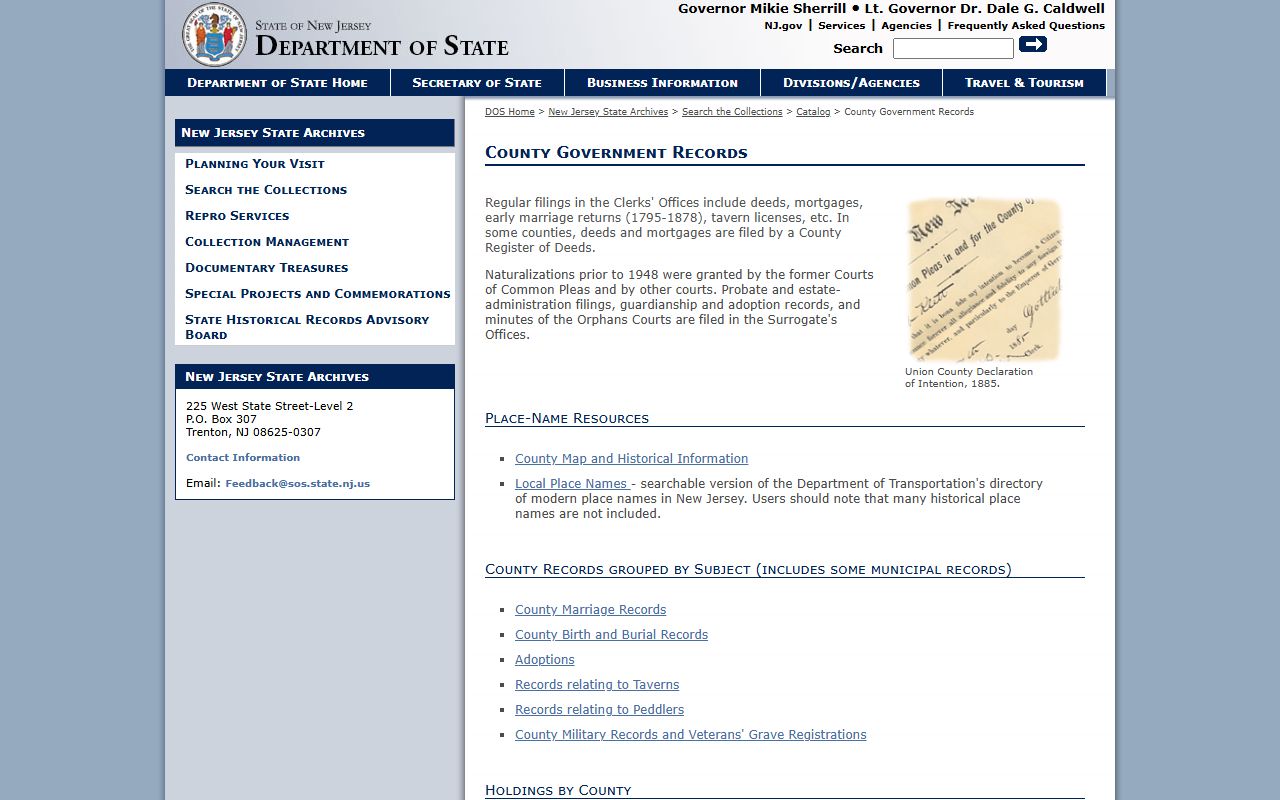
For older land records, the NJ State Archives Early Land Records Database is a key resource. This free database indexes over 75,210 land records held by the State Archives. It contains more than 385,383 name entries from over 120 record books. Dates range from 1650 through the 1900s. Most records fall between 1675 and 1900. Keep in mind that deeds after 1785 were filed at the county level and are not in this state database. The project was a joint effort of the State Archives and the Genealogical Society of New Jersey.
You can also search in person at any county clerk or register of deeds office. Staff can help you find records and make copies. Most offices have public access computers in their record rooms. Some charge a small fee per page for copies. Certified copies cost more than plain ones at most New Jersey property records offices.
Types of New Jersey Property Records
Property records in New Jersey cover a wide range of documents. Each one serves a different purpose in real estate. The county clerk or register files and keeps them all. Here are the most common types you will find when searching New Jersey property records.
A deed is the main document that shows who owns a piece of land. When property changes hands, a new deed is filed with the county. The deed lists the seller, the buyer, the legal description of the land, and the sale price. New Jersey law under N.J.S.A. 46:26A-1 requires all instruments affecting real property to be recorded with the county. This gives public notice of the ownership change. Without recording, a new owner has less protection against later claims on that land in New Jersey.
Mortgages are the next most common type. A mortgage is a loan secured by real property. The lender files the mortgage with the county to put a lien on the property. When the loan is paid off, a discharge or release is filed to remove that lien. You can search mortgage records in New Jersey to see what loans are tied to a property and whether they have been paid.
Other documents found in New Jersey property records include:
- Federal and state tax liens
- Lis pendens (foreclosure notices)
- Construction liens
- UCC financing statements
- Powers of attorney related to real estate
Tax assessment records are kept by each town's tax assessor and the county tax board. These show the assessed value of the land and buildings on it. Under N.J.S.A. 54:4-1, all real property must be assessed at true market value. The NJ Association of County Tax Boards works with the Division of Taxation to keep assessments fair across all counties. Tax appeal deadlines are set each year, usually April 1st, for property owners who think their assessment is wrong.
Recording Fees for Property Records in New Jersey
Every county in New Jersey charges fees to record documents. These fees are set by state law and are fairly standard across all 21 counties. The cost depends on the type of document and how many pages it has.
For most counties, the first page of a deed costs $40 to record. Each added page costs $10. Mortgage recording starts at $30 for the first page, with $10 for each page after that. A discharge or release of a mortgage also starts at $30. Certified copies run about $10 plus a per-page charge. Self-service copies at most offices cost $0.05 per page. Some counties add a small surcharge for the Homelessness Trust Fund, usually $5 per document.
New Jersey also charges a Realty Transfer Fee when property is sold. The fee applies to the deed at the time of recording. Rates vary based on the sale price. For sales up to $150,000, the fee is $2.00 per $500 of value. Above $150,000, the rate goes up. This fee is separate from the recording fee and is collected by the county at the time you file the deed for New Jersey property records.

Many counties now accept documents through electronic recording (eRecording). This lets title companies, lawyers, and lenders submit deeds and mortgages online. The process is faster and cuts down on errors. Not all document types can be e-filed yet, but most common land records qualify. Check with your county to see what they accept through their New Jersey property records eRecording system.
Public Access to Property Records in New Jersey
New Jersey property records are public. The Open Public Records Act gives every person the right to access them. You do not need to be the owner or have any stake in the property. The law replaced the old "Right to Know Law" in 2002. It made it easier to get records from state and local offices. Fees for copies are low. Letter-size pages cost $0.05 each. Legal-size pages cost $0.07.
Some data has been restricted in recent years. Due to Daniel's Law, which took effect on January 1, 2023, some websites no longer show full tax list and property sales data online. The NJ Association of County Tax Boards removed public access to Tax List (MODIV) and Property Sales (SR1A) data from its site. You can still get this data by contacting the 21 individual counties or the right state agency. Under N.J.S.A. 54:1-35.6, real estate sales ratio records at the county level are still public records for OPRA purposes.
Personal details like Social Security numbers are always removed from public copies of New Jersey property records. If an agency denies your request, OPRA provides a way to appeal the decision. The Rutgers Law Library guide to New Jersey public records has helpful tips on how to file an OPRA request and what to expect from the process.
Property Title Searches in New Jersey
A title search checks all the New Jersey property records tied to a parcel. It tells you who owns the land and whether there are liens, mortgages, or other claims on it. Title searches are a key part of buying or selling real estate. Most buyers use a title company or attorney for this step.
The search starts at the county clerk or register of deeds where the property sits. The searcher looks through deed records, mortgage records, tax liens, judgments, and any other filings tied to that parcel. In New Jersey, some counties let you do this online. Others require an in-person visit to the record room. Essex County, for example, requires title searches to be done in person at the Register of Deeds and Mortgages office in Newark. Their records go back to 1637.
The NJ State Archives also holds microfilm copies of county records. These include deeds up to about 1901 for all counties except Union, and grantor/grantee indexes up to about 1920 for all counties except Bergen. For very old property records, this is a good place to search. The Archives staff can help with research requests for New Jersey property records.
New Jersey Property Tax Records
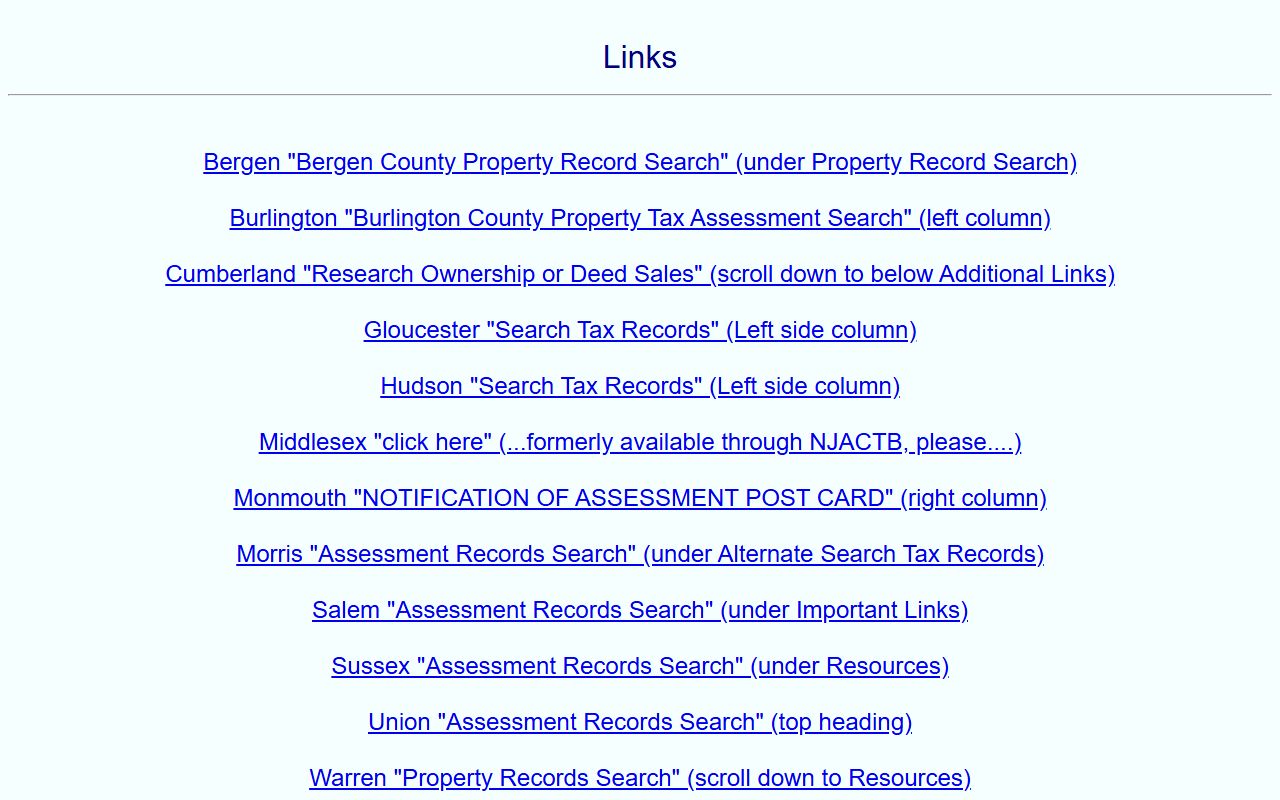
Tax records are a big part of property records in New Jersey. Every property in the state gets assessed each year by the local tax assessor. That assessment sets the base for your property tax bill. Tax records show the assessed value of the land and any buildings on it, plus the tax rate and amount due.
The NJ Tax Records Portal lets you search property tax records from many counties in one place. You pick a county and town, then search by address or owner name. The site shows assessment data, property details, and ownership info. It is a useful tool when you need a quick look at tax data across multiple towns in New Jersey.
The NJ Division of Revenue runs the Uniform Commercial Code (UCC) filing system, which ties into property records when personal property is used as collateral. The UCC search service has both certified and non-certified search options. Both link to an image system for retrieving filed documents. This is separate from land records but can matter in some real estate deals in New Jersey.
Note: Tax assessment lists are filed each January by the local assessor and changes after that date will not show until the next filing for New Jersey property records.
Research Tools for New Jersey Property Records
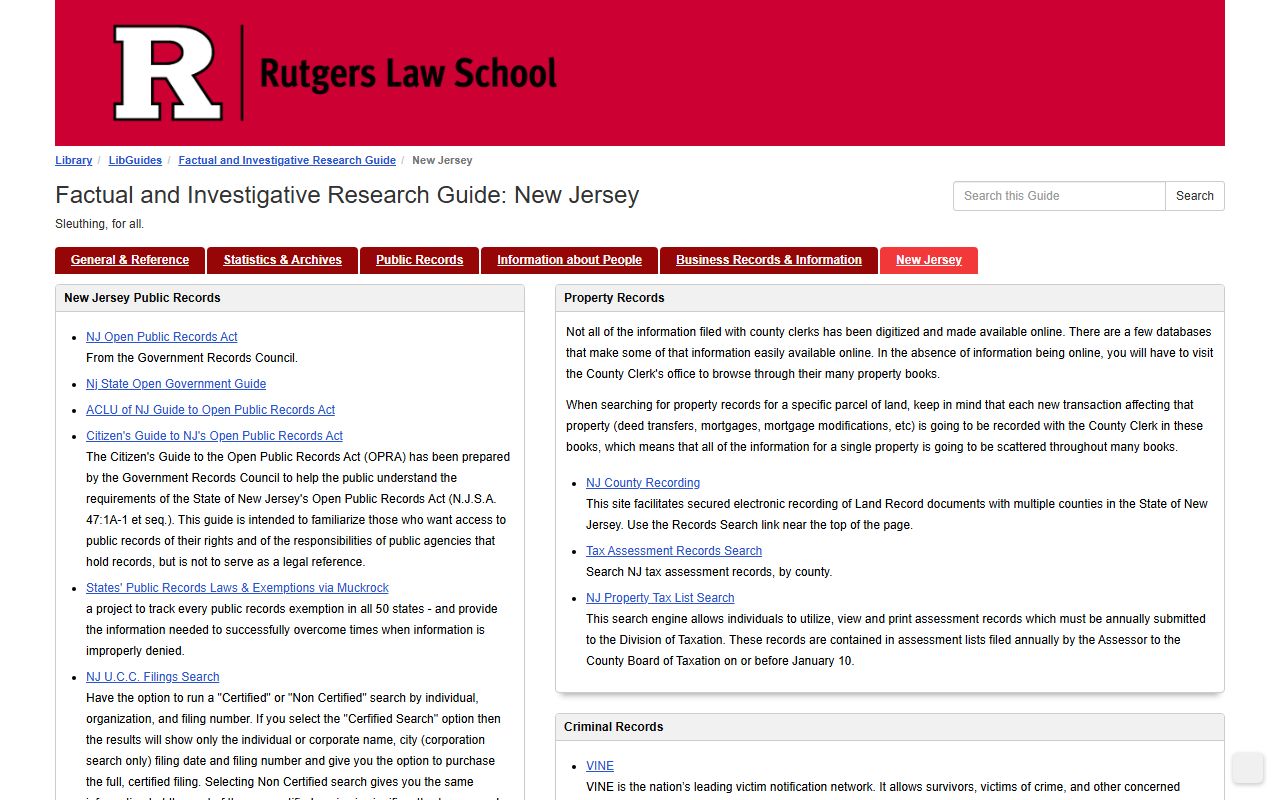
The Rutgers Law Library keeps a full guide to New Jersey public records that includes property records. The guide covers OPRA requests, county recording offices, tax assessment searches, and UCC filings. It is written for researchers and legal workers but anyone can use it to learn how New Jersey property records systems work.
For fraud protection, many counties offer free alert services. These programs send you an email when a document is filed with your name on it. This helps catch unauthorized transfers or fake mortgages early. Counties like Atlantic, Hudson, Monmouth, Passaic, and Union all run these programs at no cost. Check with your county clerk to sign up for their property fraud alert service for your New Jersey property records.
Browse New Jersey Property Records by County
Each county in New Jersey has its own clerk or register of deeds that keeps property records. Pick a county below to find local search tools, contact info, and recording details for that area.
Property Records in Major New Jersey Cities
Residents of major cities search for property records through their county clerk or register of deeds. Pick a city below to learn about property records in that area.